Yoga for Menopause Relief (With Video Guides)

Table of Contents
Are you battling unpredictable hot flashes and sleepless nights? For menopausal women, even routine activities can become challenging as hormonal fluctuations trigger everything from mood swings to joint pain.
Yoga offers a natural approach that addresses both physical symptoms and emotional well-being through simple, accessible practices.
Menopause is a natural part of life, but that doesn’t mean you have to simply endure its symptoms. Hot flashes, insomnia, mood swings, and fatigue can make this transition feel overwhelming, leaving many women searching for relief.
The good news? You don’t have to navigate this phase alone, and there are natural ways to restore balance. Yoga for menopause offers a powerful, holistic approach to easing discomfort—helping you regain energy, improve sleep, and find calm amidst change.
As a yoga teacher and someone who has personally experienced the ups and downs of menopause, I’ve found immense relief through yoga. The breathing techniques, gentle movements, and restorative postures have not only helped me but also countless women I’ve worked with.
In this post, I’ll share the key yoga practices that have made a difference—along with video guides so you can experience their benefits firsthand.
Let’s explore how yoga can support you during menopause, offering tools to manage symptoms naturally while strengthening both body and mind.
Updated October 2026. This article is general information, not medical advice. If you have a health condition or aren't sure what's right for you, check with your doctor before starting a new practice.
Practise this with me in the Yogaia app. My Menopause – Women's Health collection brings together guided classes for the symptoms in this article: sleepless nights, hot flushes, low energy, stiff joints and mood swings. You'll find it under Collections in the app, and your free trial gives you access to all Yogaia classes, not just this collection.

Start your free trial →
Download the app: App Store · Google Play
Benefits of Yoga for Menopause
Yoga for menopause is a holistic practice that addresses the body, mind, and emotions, making it an ideal tool for managing the symptoms of this transition. By incorporating yoga into your routine, you can alleviate discomfort and enhance overall well-being. Here’s why yoga is particularly beneficial during this phase of life:
Stress & Anxiety Reduction
Menopause is often accompanied by increased stress and anxiety due to hormonal fluctuations. Yoga calms the nervous system, lowers cortisol levels, and promotes relaxation while it also improves mental clarity and focus.Improved Sleep & Relaxation
Insomnia is a common symptom of menopause. Practicing calming yoga poses and breathing exercises can help quiet the mind and prepare the body for rest.Joint & Bone Health
With declining oestrogen levels, bone density decreases, increasing the risk of osteoporosis. Yoga includes weight-bearing poses that can help maintain bone strength and improve joint flexibility, relieving stiffness and discomfort.Hormonal Balance
Certain yoga poses stimulate the endocrine system, which regulates hormones. This can help alleviate symptoms like mood swings and hot flushes.Improved Balance & Core Strength
Menopause often affects balance and coordination. Yoga strengthens the core and improves body awareness, which can reduce the risk of falls.Energy Boost
Yoga can increase energy levels without overexerting the body.Emotional Support
Yoga fosters a sense of self-compassion, acceptance, and mindfulness, helping women navigate the emotional ups and downs of menopause.
Yoga for Perimenopause
Many women notice changes years before their periods stop. During perimenopause, hormone levels rise and fall unpredictably, which is why sleep, mood, energy and body temperature can feel different from one week to the next. Many women start noticing it in their early to mid-40s, and some even earlier.
This is a great time to start a regular practice. Calming practices such as Yin Yoga, gentle breathwork and meditation help settle a nervous system that feels on high alert. Stronger practices that build muscle and bone help you prepare your body for the years ahead. You don't need long sessions: 15–25 minutes a few times a week is enough to feel the difference.
Every practice in this article is suitable for perimenopause as well as menopause and after.
Breathing Exercises for Menopause Symptoms
1. Cooling Breath for Insomnia or Hot Flushes
The Sheetali Pranayama (Cooling Breath) is an effective technique for hot flushes and insomnia. It cools the body, calms the mind, and reduces stress.
How to Practice Sheetali Pranayama:
Sit in a comfortable position with your spine straight and shoulders relaxed.
Curl your tongue into a tube shape (or simply part your lips slightly if you can’t curl your tongue).
Inhale slowly through your curled tongue or parted lips, feeling the cool air enter your body.
Close your mouth and exhale slowly through your nose.
Repeat for 10-15 rounds.
This breath is cooling, soothing, and particularly helpful right before bed or during a hot flush.
Struggling with sleep? Try my 15-minute Meditation for Better Sleep in the Menopause – Women's Health collection in the Yogaia app.
2. Energizing Breath for Brain Fog or Fatigue
The Kapalabhati Breathing (Breath of Fire) is invigorating and clears mental fog. It energizes the mind and improves focus by increasing oxygen flow to the brain.
How to Practice Kapalabhati:
Sit in a comfortable position with your spine straight.
Take a deep breath in through your nose.
Exhale forcefully through your nose, pulling your belly button inward toward your spine with each exhale. The inhale happens passively.
Repeat this rhythmic exhale for 20-30 breaths, then take a deep breath and relax.
Start with 1-2 rounds and gradually increase as you feel comfortable.
Note: Avoid this practice if you feel lightheaded or have high blood pressure.
Need more energy? Yang Yoga for Menopause (25 min) is a dynamic class to wake up body and mind. Find it in the Menopause – Women's Health collection.
Restorative Yoga Poses for Menopause
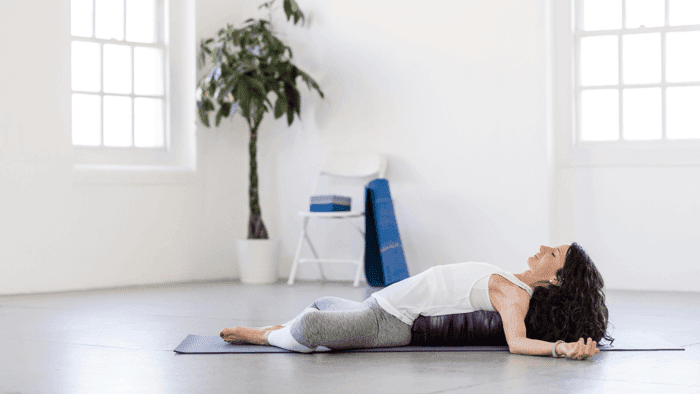
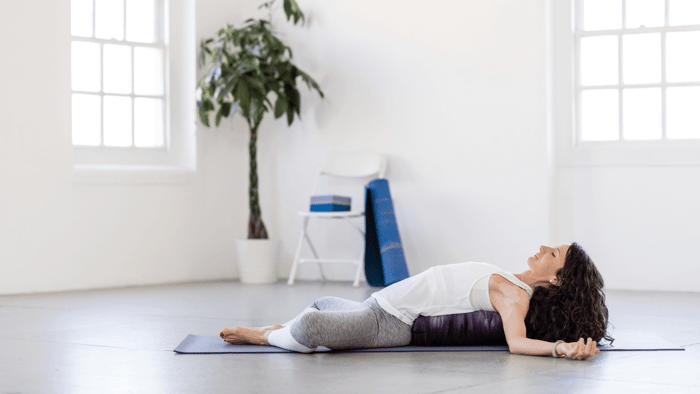
1. Reclined Butterfly Pose (Supta Baddha Konasana)
This pose opens the hips and chest while promoting relaxation and reducing anxiety.
How to Practice:
Lie on your back with the soles of your feet together and knees falling outward. Option: have a bolster under your back, along the spine.
Place cushions or blocks under your knees for support.
Rest your arms by your sides, palms facing up.
Close your eyes and relax for 5-8 minutes.
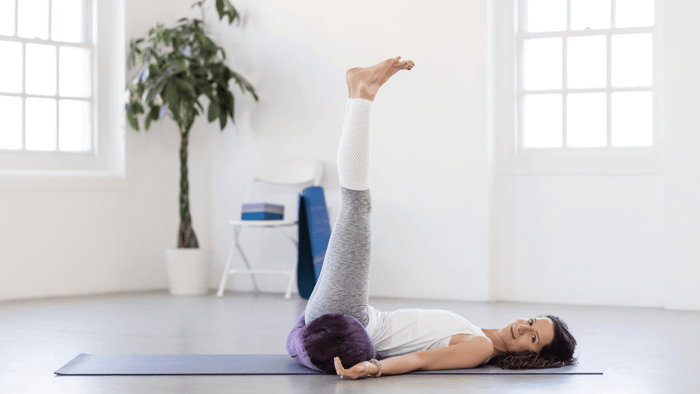
2. Legs-Up-the-Wall Pose (Viparita Karani)
This pose improves circulation, reduces fatigue, and calms the nervous system.
How to Practice:
Sit sideways next to a wall, then lie back and swing your legs up against the wall.
Adjust your distance from the wall so your legs feel supported. Option: use a strap around your ankles to keep legs still and relaxed.
Rest your arms by your sides and close your eyes.
Stay in the pose for 5-8 minutes.
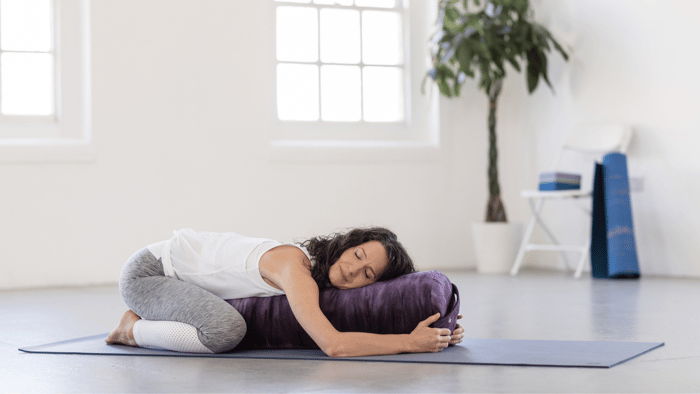
3. Child’s Pose (Balasana)
This pose gently stretches the lower back and hips while calming the mind.
How to Practice:
Kneel on the floor and sit back on your heels. Option: use bolster under your belly and chest.
Fold forward, stretching your arms out in front of you or resting them by your sides.
Rest your forehead on the floor or a cushion.
Stay in the pose for 3-5 minutes.
Want to stay in restorative poses like these with me guiding you? Try Yin Yoga for Menopause (25 min) in the Yogaia app.
Patricia's Menopause – Women's Health Collection
I created this collection for women who want a simple place to start. It combines knowledge, movement and rest, so you can choose what your body needs today. The collection includes:
| Class | Length | Level | Good for |
|---|---|---|---|
| Talk: Why Menopause Matters | 27 min | 1–3 | Understanding what is happening in your body and why |
| Yang Yoga for Menopause | 25 min | 2 | Energy, strength and bone health |
| Yin Yoga for Menopause | 25 min | 1–2 | Stiff joints, stress and mood swings |
| Meditation for Better Sleep | 15 min | 1–3 | Insomnia and restless nights |
How to use it: start with the talk, then alternate Yang and Yin Yoga during the week and use the sleep meditation in the evenings.
Find the collection in the Yogaia app under Collections → Menopause – Women's Health. Alongside it, you can build on your practice with Yogaia's Relaxing Yoga, Stretching, HIIT & Strength and Meditation classes, with 50+ new live and on-demand classes every week.
Try for free
Download the app: App Store · Google Play
FAQ: Yoga for Menopause
What type of yoga is best for menopause?
Gentle and restorative yoga styles, such as Yin Yoga, Hatha Yoga, and Restorative Yoga, are particularly beneficial. These practices focus on relaxation, flexibility, and deep breathing, which help ease stress, improve sleep, and balance hormones. Additionally, strength-building yoga, like slow Vinyasa or Power Yoga with controlled movements, can be beneficial for maintaining muscle mass and improving bone health, which are crucial during menopause.
Can yoga increase estrogen levels?
While yoga for menopause does not directly increase estrogen levels, research suggests that it helps regulate the endocrine system, reducing stress-related cortisol spikes that can negatively impact hormone balance.
What is the best exercise for menopause?
A combination of yoga, strength training, and cardio (like walking, running, or swimming) is recommended. Weight-bearing exercises help maintain bone density, while yoga supports flexibility, balance, and relaxation.
Can yoga reverse perimenopause?
Yoga for menopause cannot reverse perimenopause, as it is a natural biological process. However, regular practice can alleviate symptoms like mood swings, insomnia, and joint pain, making the transition smoother and more manageable.
How often should I do yoga for menopause?
Aim for three to four sessions a week. Short sessions count: 15–25 minutes is enough. Mix calming practices such as Yin Yoga and breathwork with stronger practices that build muscle and support bone health.
Can yoga help with menopause weight gain?
Yoga isn't a quick fix for weight, but it can help. Strength-based yoga builds muscle, and better sleep and lower stress make it easier to manage changes in body composition during menopause.
Is yoga safe during menopause?
For most women, yes. Choose gentle options if you're new to yoga, avoid Kapalabhati if you have high blood pressure, and check with your doctor if you have osteoporosis or another health condition.
Final Thoughts
Menopause is a time of profound change, but yoga for menopause provides a safe, nurturing, and empowering way to navigate this transition. Whatever your symptoms, yoga offers tools to ease them, strengthen your body, and calm your mind. Every woman’s journey through menopause is unique, so listen to your body and adapt your practice to meet your needs.
Remember, yoga is not about perfection - it’s about connection. By practicing regularly, you can cultivate strength, resilience, and a deeper sense of self-compassion during this transformative phase of life.
Your menopause practice is waiting. Join me in the Menopause – Women's Health collection and explore all Yogaia classes with a free trial.
Start your free trial →
Download the app: App Store · Google Play
[signup_form title="Get Your Free Wellness Ritual Guide" body="Join our list and receive a simple guide to morning boosts and evening wind-downs."]
Want to Learn More?
Here's a list of books, apps and podcasts I recommend.
BOOKS:
- Dr Louise Newson – The Definitive Guide to the Perimenopause & Menopause
- Maisie Hill – Perimenopause Power
- Davina McCall – Menopausing
- Stacey Sims – Next Level (about fitness during Menopause)
- Ross, Moffat and Smith – The Female Body Bible
OTHER APPS:
- Balance – the Menopause App by Dr Louise Newson (not to be confused with: Balance the Meditation App)
PODCASTS:
- The Dr Louise Newson Podcast
- Owning Your Menopause
- Sex, Lies and Menopause
